
The Holden VE Calais: A Testament to Australian Automotive Excellence
The Holden VE Calais is a full-size car that stands as a testament to the craftsmanship and design prowess of Australia’s automotive industry. Manufactured by Holden, an Australian subsidiary of General Motors, the VE Calais is part of the Holden Commodore VE series, which was produced from 2006 to 2013.
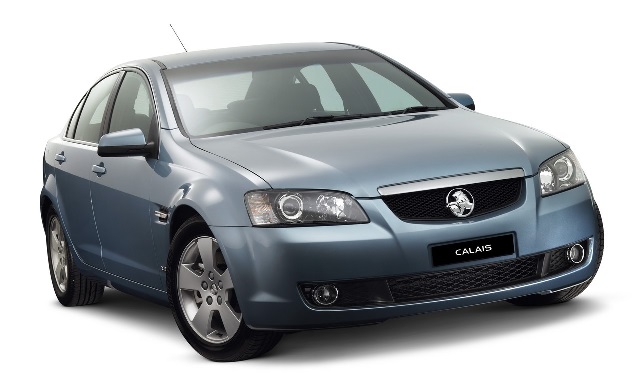
The VE Calais, while retaining the taillights design similar to the Berlina, presents them in a darker tint. This model retains the features of its predecessor but at a more affordable price, offering an attractive mix of luxury and sportiness. It combines the High Output Alloytec LY7 V6 engine from the SV6 with a five-speed automatic transmission. Unlike the semi-sport suspension setup known as FE1.5 in the previous Calais model, the VE adopts the stiffer sports suspension from the Commodore SS/SS V.
Like the SS, a high-end V-Series edition is also available. As the flagship model of the Commodore range, the Calais brings together all the best features of the VE and serves as a gateway to the luxury long-wheelbase Statesman/Caprice range based on the VE. Unique to the Calais and Berlina are the larger taillamps in the range.
The Calais V International, based on the Series I model, was available with either a V6 or V8 engine and an automatic transmission. This model featured 19″ alloy wheels, distinctive interior trim, chrome exterior door handles, color satellite navigation, and alloy-faced pedals.
The Calais V 60th Anniversary Edition came with an electronic sunroof and 19″ alloy wheels. It also boasted an onyx/light urban leather interior, alloy-faced pedals, and chrome exterior door handles.
Design and Performance
The Holden VE Calais is a blend of luxury and performance. Its sleek design and state-of-the-art features make it a standout in its category. The model comes in both sedan and station wagon versions, offering flexibility to cater to different needs. The Calais displays taillights that bear a resemblance to the Berlina’s, but with a darker tint.
Under the hood, the VE Calais V boasts a Generation IV Alloy V8 engine, delivering a robust 210 kW of power at 6,400 rpm and 350 Nm of torque at 2,900 rpm. This powerful engine, standard with SS and SS V-Series models, and optional with the Calais V-Series, makes the VE Calais a force to be reckoned with on the road.
Features and Specifications
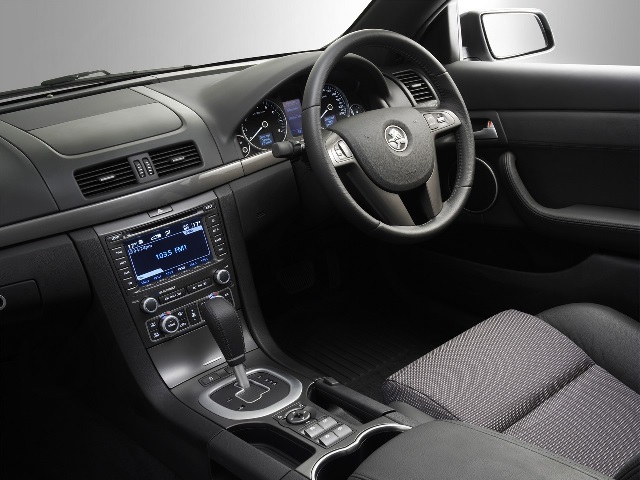
The Holden VE Calais is packed with features designed to enhance the driving experience. It offers a comprehensive safety package that includes six airbags, electronic stability control, and anti-lock brakes. The car also comes with dual-zone climate control, satellite navigation, and a premium sound system.
In terms of interior comfort and aesthetics, the VE Calais does not disappoint. The spacious interior, high-quality materials, and attention to detail contribute to a refined and comfortable driving experience.
VE Calais Equipment List
Below is a list of equipment that was available with the VE Calais:
- 6 inch Multifunctional Display
- 17 inch Alloy Wheels
- Anti-lock Brakes
- Automatic Headlamp
- Audio – Aux Input Socket (MP3, CD, Cassette)
- Bluetooth System
- CD Player
- Electronic Brakeforce Distribution
- Electronic Stability Control
- Front Foglamps
- Leather wrap gear selector
- Leather wrap multi-functional steering wheel
- Leather appointed seats
- Projector Headlamps
- Rear park assist
- Traction Control
- Steering wheel mounted audio controls
- Full-size Spare Wheel (Optional)
- Tyre Sealant and Air Compressor Kit (Optional)
VE Calais Series I 2006 – 2010
Launched in August 2006, the Holden VE Series I (VE.I) Calais, a full-size sedan, was produced in Elizabeth, South Australia. The VE Calais, a rear-wheel-drive vehicle, was initially offered with two engine options: a 3.6-litre V6 and a 6.0-litre V8, both running on petrol. The range of Calais models included the standard Calais and the Calais V.
VE Calais Series I Engines
The VE Calais Series 1 was equipped with a choice of four engines: two V6 models, the LY7 and LLT, and two V8 models, the L98 and L76. The VE range introduced new engine control systems that utilized digital sensors for tracking the positions of crank and camshafts. Additionally, service intervals for the V8 engines were extended from 10,000 to 15,000 kilometres.
| Model | Production Dates | Engine | Peak power | Peak torque | Transmission |
| Calais Series 1 | Aug 2006 to Sep 2009 | 3.6-litre LY7 petrol V6 | 195kW at 6500rpm | 340Nm at 2600rpm | 5 sp auto |
| Calais Series 1 | Sep 2009 to Sep 2010 | 3.6-litre LLT petrol V6 SIDI | 210kW at 6400rpm | 350Nm at 2900rpm | 6 sp auto |
| Calais Series 1 | Aug 2006 to Dec 2008 | 6.0-litre L98 petrol V8 | 270kW at 5700rpm | 530Nm at 4400rpm | 6 sp auto |
| Calais Series 1 | Jan 2009 to Sep 2009 | 6.0-litre L76 petrol V8 AFM | 260kW at 5700rpm | 517Nm at 4400rpm | 6 sp auto |
| Calais V Series 1 | Aug 2006 to Sep 2009 | 3.6-litre LY7 petrol V6 | 195kw at 6500rpm | 340Nm at 2600rpm | 5 sp auto |
| Calais V Series 1 | Sep 2009 to Sep 2010 | 3.6-litre LLT petrol V6 SIDI | 210kW at 6400rpm | 350Nm at 2900rpm | 6 sp auto |
| Calais V Series 1 | Aug 2006 to Dec 2008 | 6.0-litre L98 petrol V8 | 270kW at 5700rpm | 530Nm at 4400rpm | 6 sp auto |
| Calais V Series 1 | Jan 2009 to Sep 2010 | 6.0-litre L76 petrol V8 AFM | 260kW at 5700rpm | 517Nm at 4400rpm | 6 sp auto |
Calais Series 1 V6 Engines
The 3.6-litre ‘Alloytec’ LY7 V6 petrol engine featured an all-aluminium design, a forged steel crankshaft, powdered metal connecting rods, dual knock control sensors, double overhead camshafts (DOHC), sequential electronic fuel injection, four valves per cylinder, continuously variable intake and exhaust camshaft phasing, electronic throttle control, a compression ratio of 10.2:1, and coil-on-plug ignition. For the VE range, these Alloytec engines were equipped with new variable intake manifolds, Bosch E77 engine control systems with digital crank and camshaft position sensors, front and rear oxygen (O2) sensors, retuned harmonic balancers, and a new dual exhaust system.
Spetember 2009 saw the launch of the (‘MY10’), the 3.6-litre LLT V6 petrol engine utilized direct injection (Holden’s Spark Ignition Direct Injection or SIDI), where fuel was pressurized and directly injected into the combustion chamber and had a compression ratio of 11.3:1.
Calais Series 1 V8 Engines
The 6.0-litre L98 pushrod V8 engine featured an all-aluminium design, flat-topped pistons, forged powered metal connecting rods, a billet steel camshaft, two valves per cylinder, external knock sensors, and a compression ratio of 10.4:1.
Introduced in January 2009, the 6.0-litre L76 engine was equipped with displacement on demand hardware (Holden’s Active Fuel Management or AFM) that could deactivate four cylinders under light throttle loads in higher gears. While similar to the L98 engine, the L76 engine had a different camshaft profile and a smaller sump.
Transmissions
Initially, the V6 engines were paired with five-speed 5L40E automatic transmissions; however, for the 3.6-litre LLT engines, these were later substituted with six-speed 6L50 transmissions. The V8 engines were exclusively matched with six-speed 6L80 automatic transmissions. Both the 6L50 and 6L80 transmissions featured an ‘Active Select’ function, which allowed the driver to execute sequential gearshifts by simply tapping the gear shifter.
Brakes
VE Calais models with V6 engines were equipped with ventilated front brake discs measuring 298 mm by 30 mm, paired with twin-piston callipers, and ventilated rear discs measuring 302 mm by 22 mm, paired with single-piston callipers. In contrast, models with V8 engines were outfitted with larger front discs measuring 321 mm by 30 mm, and rear discs measuring 324 mm by 22 mm.
Suspension
The VE Calais was equipped with a ‘Linear Control’ suspension system that featured a double-pivot, MacPherson strut-based front suspension with dual lower links (each with its own ball joints), a tension link, a lateral link, and a direct-acting stabiliser bar. The back suspension comprised a four-link independent system with coil-over shock absorbers, three lateral ball joints on each side, and a decoupled stabiliser bar. Similar to the Commodore SV6, SS and SS V, the Calais also had sport handling settings.
In September 2009 (‘MY101’), the rear suspension received an upgrade with the addition of an extra cross-axis ball joint, which replaced a rubber bush in the lower control arm. The Calais also received a larger 20 mm rear sway bar during this revision.
Safety Equipment
The VE Calais came standard with a comprehensive suite of safety equipment. This included dual front airbags, front side airbags, full-length curtain airbags for both front and rear passengers, ABS brakes, electronic brake force distribution, brake assist, and electronic stability control. It also featured traction control, active front seat head restraints, and front seatbelts equipped with pretensioners and load limiters. Starting from November 2008, the Calais was enhanced with an energy-absorbing steering column shroud to provide better knee protection.
VE Calais Series II 2010 – 2013
Launched in September 2010, the VE Series II (VE.II) Calais brought a refreshed interior, additional features, and better fuel efficiency. The L76 V8 engine was swapped out for the L77 engine, which boasted flex-fuel capabilities, allowing it to run on a blend of petrol and ethanol up to E85 (i.e., 85% ethanol and 15% petrol). Despite ethanol’s lower energy density compared to petrol, its higher octane rating offered enhanced performance. Additionally, the idle speed for the 3.6-litre LLT SIDI V6 engine was lowered.
The updates in the VE.II may not be immediately apparent until you sit inside, but they are significant. The headline feature is the introduction of E85 bio-ethanol engines, marking an important step in making Australia’s locally-made cars more eco-friendly. This was Holden’s initial attempt before exploring options like hybrids.
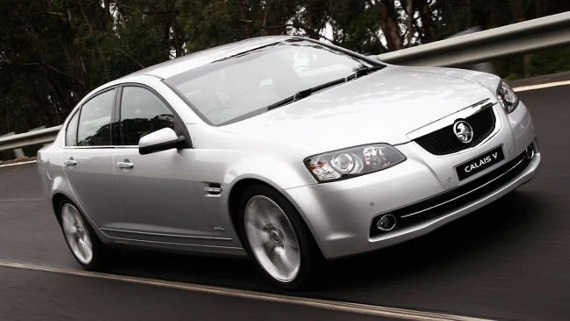
Fuel efficiency for the VE.II Calais was improved by enhancing aerodynamics, including additions like rear wheel air deflectors and underfloor airflow panels, and integrating a clutched air conditioning compressor. The VE.II Calais can be identified visually by its redesigned headlights, larger grille with a chrome frame and mesh insert, conspicuous chrome bonnet header, and full-width bright detailing for the lower fascia.
In a November 2011 update (MY12), flex-fuel capability was introduced for the 3.6-litre V6 engine, now designated LFX. Additional measures to improve fuel economy included replacing the six-speed 6L50 transmission with the more efficient 6L45 for V6 models, and re-engineering the air conditioning system for both V6 and V8 models to enhance its efficiency and reduce power draw.
VE Calais Series II Features
The VE.II Calais came standard with enhanced features such as 18-inch ten-spoke machined alloy wheels, a 6.5-inch colour touch-screen Holden-iQ system equipped with a single CD player, MP3 compatibility, a 1GB flash drive, USB and auxiliary inputs, integrated iPod support, Bluetooth audio streaming, touch-screen dialing, improved Bluetooth mobile phone connectivity, and leather seats.
The Calais V was further upgraded with 19-inch twin five-spoke machined alloy wheels, full-colour navigation mapping featuring voice control and real-time traffic information, and a rear camera.
In November 2011, the Calais MY12 saw improvements in the iQ media interface with better Bluetooth connectivity and smartphone-compatibility updates. While the Calais didn’t see any aesthetic changes, the Calais V was outfitted with a rear lip spoiler.
A ‘Redline’ handling package was introduced for the Calais V. This included polished 19-inch ten-spoke alloy wheels with low profile tyres, FE3 suspension tune with high-performance dampers and stiffer anti-roll bars, Brembo two-piece and four-piston front brake calipers with 355 mm inner-vented rotors, and chromed window surrounds.
VE Calais Series II Engines
| Model | Production Dates | Engine | Peak power | Peak torque | Transmission |
| Calais | 2010-11 | 3.6-litre LLT petrol V6 SIDI | 210kW at 6400rpm | 350Nm at 2900rpm | 6 sp auto |
| Calais | 2011-13 | 3.6-litre LFX petrol/E85 V6 SIDI | 210kW at 6400rpm | 350Nm at 2900rpm | 6 sp auto |
| Calais V | 2010-11 | 3.6-litre LLT petrol V6 SIDI | 210kW at 6400rpm | 350Nm at 2900rpm | 6 sp auto |
| Calais V | 2011-13 | 3.6-litre LFX petrol/E85 V6 SIDI | 210kW at 6400rpm | 350Nm at 2900rpm | 6 sp auto |
| Calais V | 2010-13 | 6.0-litre L77 petrol/E85 V8 AFM | 260kW at 5700rpm | 517Nm at 4400rpm | 6 sp auto |
Market Reception
Despite ceasing production in 2013, the VE Calais continues to remain popular among car enthusiasts and buyers. On the used car market, it is sought after for its robust build quality, comfortable ride, and advanced features. As of 2023, there are still 145 Holden VE Calais cars available for sale or order in Australia.
The price range for the VE Calais varies based on the trim level chosen. As of the latest year the model was manufactured, prices ranged from $24,420 to $42,680.
Conclusion
The Holden VE Calais is a shining example of Australian automotive excellence. Its blend of luxury, performance and affordability has ensured its enduring popularity among car enthusiasts and buyers alike. Even after production has ceased, the VE Calais continues to be a significant presence in the automotive market, attesting to its timeless appeal and quality craftsmanship.
Check out the full list of VE Commodore models